
Cashmere, honestly
Does Cashmere Pill?
Yes. All cashmere pills, and the first two or three wears are the worst of it. Pilling is short surface fibres working loose and tangling under friction — not a defect, and not evidence the sweater is fake. It slows sharply once that loose surface fibre has shed.
Below: the mechanism, where on a sweater it starts, why price predicts it badly, and how to lift pills off without thinning the knit. Pilling only — general care and spot-a-fake belong to other pages, and we link out.
- Why cashmere pills
- The first three wears, and the curve after
- The friction map: where it pills first
- Staple length, the number nobody publishes
- Does expensive cashmere pill less?
- Is pilling a sign of fake cashmere?
- How to remove pills: comb, never razor
- How to stop cashmere pilling
- When pilling is not normal
Why cashmere pills
Cashmere pills because it is made of short, fine fibres held together by twist rather than by length. The goat's undercoat is combed out in spring, and those fibres are far shorter than sheep's wool, so when the yarn is spun some ends inevitably sit near the surface instead of locked into the core.
Wear it and four steps run, over and over:
- Abrasion. Something rubs the surface — arm against torso, a strap, a desk edge. Gentle and constant is the condition that works fibre ends free.
- Migration. A loosened end walks outward through the yarn until it stands proud — the faint halo on a new sweater in raking light.
- Entanglement. Standing fibres catch each other. A pill is never one fibre; it is several.
- Rolling. Continued rubbing compacts the tangle until you can see and feel it.
Friction is the trigger at every step, which is why pilling is never even across a garment.
The first three wears, and the curve after
Pilling is worst at the start and then settles, and that follows from the mechanism. A new sweater carries a finite reservoir of short fibre near the surface — ends that never got buried during spinning and knitting. The first few wears and the first wash clear most of it, and what is left underneath was properly anchored, which takes far more work to shift.
So expect a spike and a long tail: heavy for two or three wears, lighter by the fifth or sixth, an occasional comb by the second season. Our care note says as much in one line — natural pilling may appear during the first two to three wears, comb gently if needed. So do not judge a cashmere sweater in week one: week one is the reservoir shedding, not the fabric failing.
The friction map: where it pills first
Because friction drives it, pilling has a geography — and knowing it lets you catch the first pills while they still comb away in seconds.
| Underarm and side of the body | Arm against torso, every step. Almost always first, and noticed last because you cannot see it |
|---|---|
| Wherever a bag strap sits | One shoulder, and the opposite hip a messenger bag swings against. Distinctly asymmetric |
| Cuffs and outer forearm | Desk edges, laptop palm rests, and every coat sleeve lining you own |
| The seatbelt diagonal | A band from one shoulder to the opposite hip, on the side you drive from |
| The back panel | Chair backs, car seats, and two vertical strips where a rucksack sits |
| Neckline and upper chest | Stubble, a scarf, a coat collar |
| The hem, at the front | Where a jacket closes over it, and against a belt when you sit |
Two things follow. First, fit changes it: a sweater pulled tight under the arm rubs harder than one with room to move, and a sleeve that is too long drags over your hand all day. Measurements for every size are in the Men's Cashmere Sweater Size Guide & Fit.
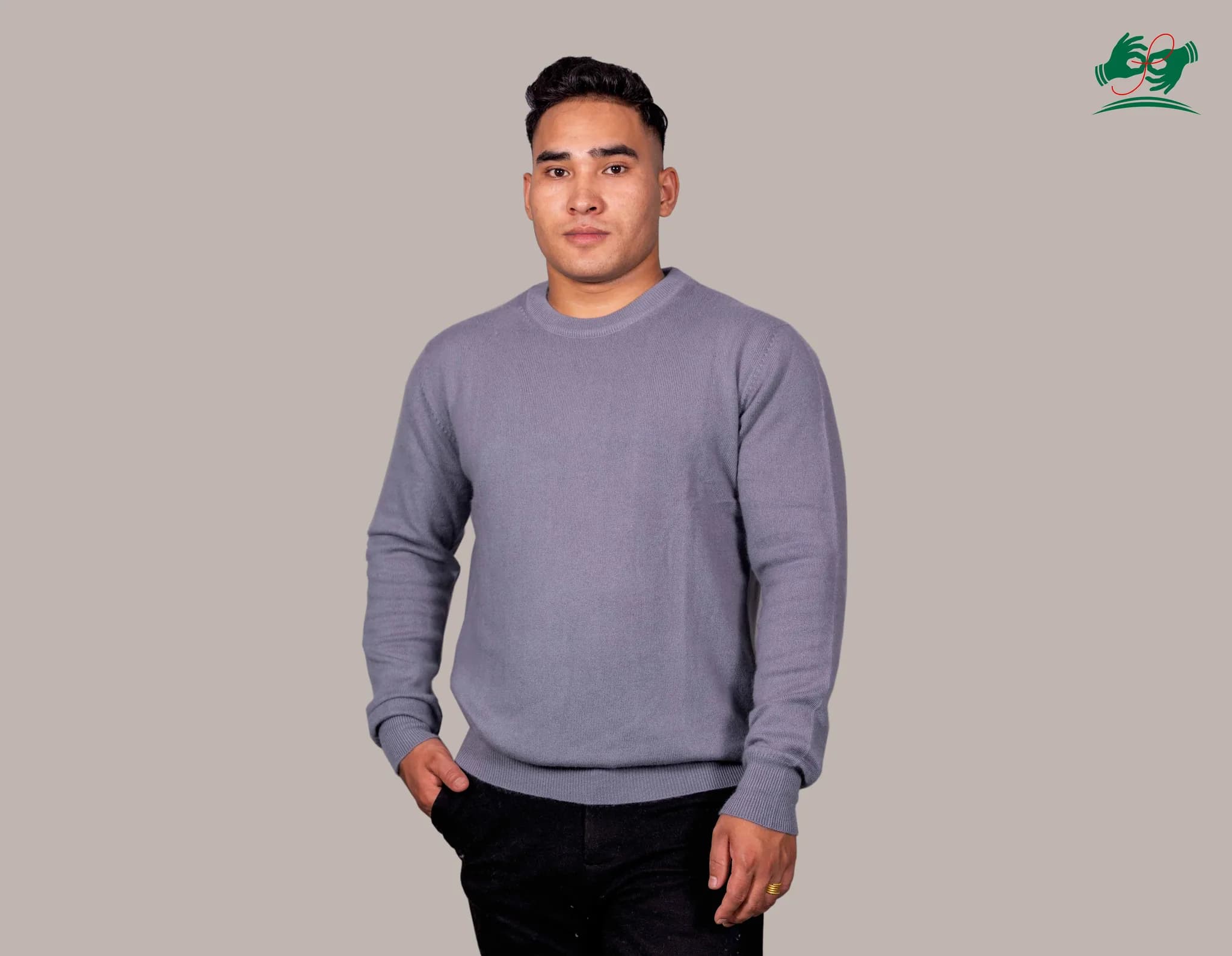
Second, neckline changes where it starts. The ribbed collar on a Men's Crew Neck Cashmere Sweater takes stubble and scarf abrasion directly. The opening on a Men's V-Neck Cashmere Sweater moves that contact down to the chest, where a shirt collar does the rubbing. Neither is more durable; they wear in different places.
Staple length, the number nobody publishes
Nearly every cashmere brand advertises micron — fibre diameter. Ours is 12–16 micron, on every product page. But micron measures fineness, which is what makes cashmere feel soft; it does not determine whether it pills.
The spec that governs pilling is staple length: how long each fibre is before it is spun. Longer fibre means fewer loose ends per centimetre of yarn, each anchored more securely, and twist is the second variable for the same reason. The uncomfortable part: finer fibre is often shorter fibre, so softness and pill resistance pull against each other.
| Fibre diameter | 12–16 micron. Measured, published on every product page |
|---|---|
| Grade | Grade A — a trade convention for fineness and length, not a legal standard |
| Staple length | To be confirmed from the workshop |
| Twist / spin tightness | To be confirmed from the workshop |
Why the important row is blank
Staple length is the number that most directly governs how much a sweater pills, and we do not publish it, because we have not measured it. We have asked Pokhara; until they answer it stays to be confirmed rather than estimated. A guess at the figure that matters most would be worse than a blank.
Does expensive cashmere pill less?
Sometimes, but the correlation is weak enough not to rely on. Price is set by brand, margin, dyeing and finishing; pilling is set by staple length and twist. Much expensive cashmere is sold on the first touch in a shop, which rewards fineness — and finer fibre is frequently shorter fibre, so optimising for the shelf can make a sweater pill more, not less.
- Price does buy consistent dyeing, better finishing and often a denser knit, which resists pilling somewhat.
- It does not buy longer fibre in any reliable way. Nothing on a price tag tells you staple length.
- It does not buy immunity. There is no price at which cashmere stops pilling.
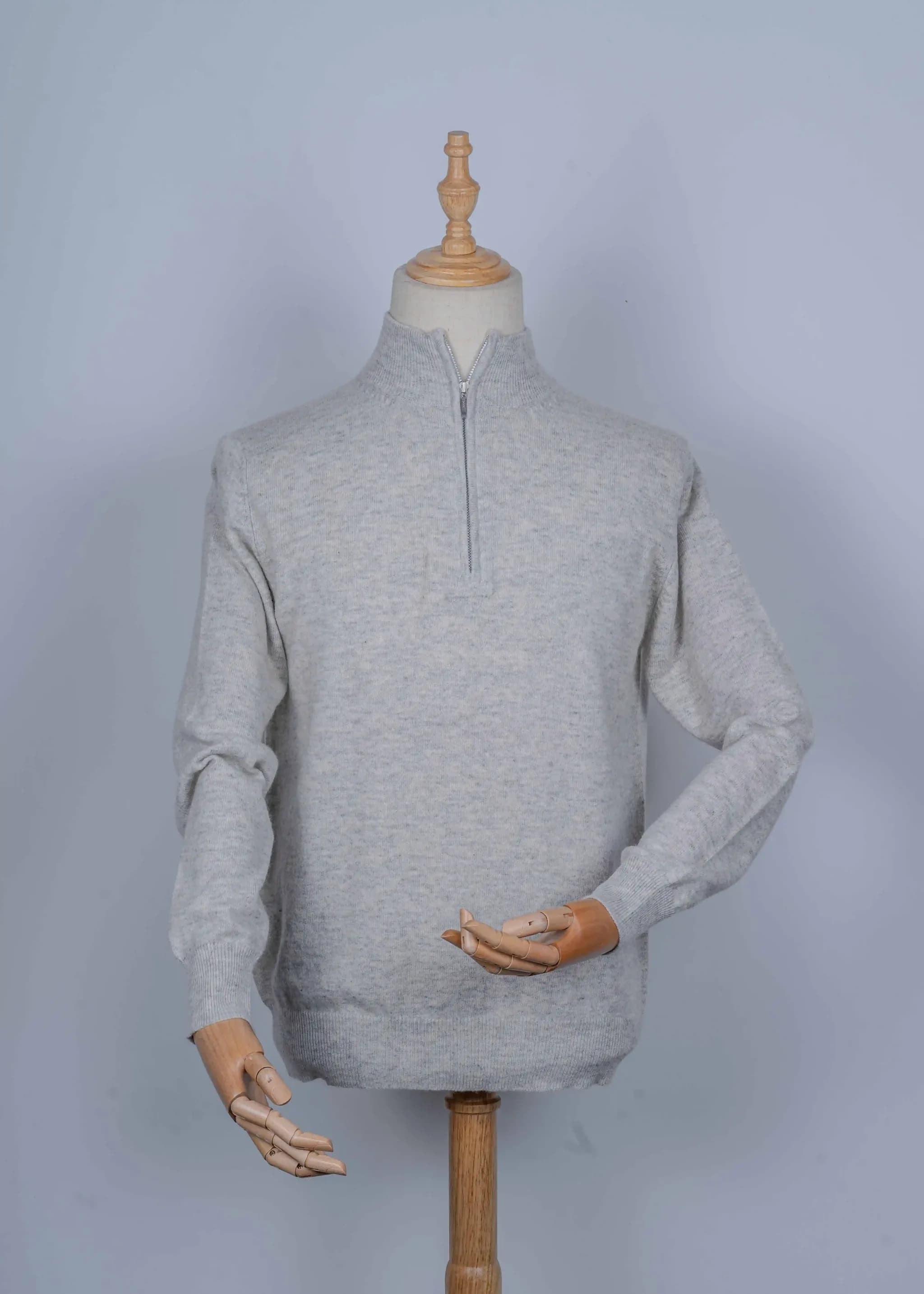
Ours are $155 for the crew and V-neck and $120 for the quarter zip — low for Grade A cashmere, because we sell from the workshop that makes it, and The Artisans Who Make Your Sweater names the stations and the people at them. We will not claim the price means it pills less.
Is pilling a sign of fake cashmere?
No — and it is the most common wrong conclusion drawn about a perfectly good sweater. Pilling is what real cashmere does; it follows from short fibre, the same property that makes cashmere soft. Synthetic blends usually pill more, not less. What changes is the character of the pill:
| Real cashmere | Soft fuzz, then loose pills that lift away under a comb without resistance. No static. Concentrated at friction points |
|---|---|
| Synthetic-heavy blend | Hard, tacky balls within days that hold on tightly. Static builds, fibres cling to your hand, and it spreads across whole panels rather than following friction |
A pill that comes off easily is good news about the fibre; one you have to fight is worth investigating. To test a sweater you already own, How to Verify Your Cashmere Is Real sets out the burn and rub tests and the limits of both.
The general fake-cashmere question
Judging an unfamiliar listing from a brand you do not know is a different question, with a better answer already written — our parent workshop's guide to checking real cashmere.
How to remove pills: comb, never razor
A cashmere comb — a small, fine-toothed comb — is the correct tool and the only one we recommend. It catches the pill and lifts the tangle away, so what leaves the garment is the knot that had already worked loose.
- Lay it flat on a table. Never comb a sweater you are wearing, or one hanging up.
- Smooth the panel flat with your free hand, without stretching it.
- Draw the comb one way only, following the run of the knit, in short strokes. Back-and-forth scrubbing is the friction you are removing.
- Use almost no pressure. The comb should skim; if it drags, you are pressing too hard.
- Work the friction points first — underarm, strap line, cuffs.
Do not use a razor, and do not use a battery fabric shaver. Both cut rather than lift, and a blade cannot tell a pill from the surface fibre bed underneath it. Every pass shears off fibre that was holding the fabric together, which thins the knit permanently, and leaves fresh cut ends — the exact starting condition for the next round of pilling.
Sticky rollers lift lint but do nothing for pills. Pumice-style sweater stones abrade the surface — closer to the razor problem than to the comb.
How to stop cashmere pilling
You cannot stop it entirely, but you can slow it a long way: reduce friction, and let the fibre recover.
- Rest it between wears. A day or two off lets fibres recover their loft, and recovered fibre tangles less. Wearing one sweater five days running is the surest way to pill it.
- Mind what goes over it. A canvas rucksack or a rough tweed coat pills a sweater faster than the sweater ever would alone. Carrying a bag daily? Alternate shoulders.
- Wear a thin layer underneath on heavy days — fewer skin oils in the fibre means fewer washes. That matters most out of season, which Can You Wear Cashmere in Summer? covers.
Washing is the part people get backwards. Under-washing causes more pilling than over-washing, because a wash carries loose surface fibre away before it can tangle — but the wash itself has to be gentle, since agitation is friction.
- Hand wash at a maximum of 30 °C with a gentle wool detergent — not a biological one, whose enzymes attack protein fibre.
- Do not rub, twist or wring. Squeeze the suds through, then press the water out.
- Reshape while damp, then dry flat, out of direct sunlight.
- Fold, never hang. A hanger stretches the shoulder over weeks, and fabric that sags rubs where it did not. Store it clean — washed before it goes away, not after.
All of that is here because it changes how much a sweater pills. The full care routine is the parent workshop's: the detailed cashmere care guide.
The sweaters this applies to. Grade A Himalayan cashmere, knitted in our Pokhara workshop, each shipping with a care note about the first two or three wears.

When pilling is not normal
Three patterns are worth acting on:
- Pilling that does not slow down. If a second season matches week one, the short fibre goes all the way through the yarn, and combing will not fix that.
- Pills on panels that never touch anything, such as the middle of the chest. Friction cannot explain those; fibre quality has to.
- Hard, tacky pills with static from the first week — the synthetic signature above, a composition question rather than a wear question.
Seeing any of those three on a sweater bought from us? Tell us. Soft fuzz at the underarm in week two is not one of them.
Common questions
Does cashmere pill?
Yes. All cashmere pills, and the first two or three wears are the worst of it. Pilling is short surface fibres working loose and tangling under friction — not a defect, and not evidence the sweater is fake. It slows sharply once that loose surface fibre has shed.
Why does cashmere pill?
Cashmere is short fibre held by twist rather than by length. When the yarn is spun, some ends sit near the surface instead of locked into the core. Friction works them loose; they migrate outward, tangle and roll into a ball.
Where does cashmere pill first?
At friction points: the underarm and side of the body, wherever a bag strap sits, cuffs and forearms, the diagonal a seatbelt crosses, and the back panel against a chair or rucksack. Flat, untouched areas pill last.
Does expensive cashmere pill less?
Sometimes, but price is a poor proxy. Pilling is governed by staple length and twist, and neither appears on a price tag. Finer fibre is often shorter fibre, so a sweater optimised for softness can pill readily whatever it cost.
Is pilling a sign of fake cashmere?
No. Pilling is normal for real cashmere. Synthetic blends often pill more, not less, and their pills are harder and tackier, with static that makes fibres cling to your hand.
How do I remove pills from cashmere?
Lay the sweater flat and use a cashmere comb, drawing it one way in short, light strokes so it lifts the tangle out. Never use a razor or a fabric shaver: they cut the surface fibre bed and thin the fabric permanently.
How do I stop cashmere pilling?
Rest it a day or two between wears, hand wash at a maximum of 30 °C with a gentle wool detergent, reshape damp and dry flat, fold rather than hang, and comb the first pills off early.